Optimize Your Cost of Goods Sold in the Beverage Industry
Turning your dream drink concept into a commercial product is only the first step when entering the beverage industry. You might have the tastiest product in the world, but market success comes to brands that've learned to manage their business expenses efficiently.
Your beverage will be the heart of your brand. As the business owner, it's your job to know the ins and outs of your product, and understanding your Cost of Goods Sold (COGS) is arguably the most crucial factor. As you grow your venture, it's ideal to maximize your production budget and identify ways to reduce costs without compromising quality.
In other words, once you know the expenditures of creating your beverage, including its per-unit cost breakdown, you will be better equipped to determine your priorities and implement meaningful business solutions.
It may sound a bit overwhelming, but the experts at Flavorman are here to help you get started!
What is "Cost of Goods Sold?"
Before you begin planning, it's important to understand what "Cost of Goods Sold" means. A business's Cost of Goods Sold (COGS) refers to any direct costs, including labor, that are associated with the production of goods sold by a company.
In the beverage industry, your total COGS will likely include the costs of ingredients and raw materials (including packaging) needed to create your beverage and ensure its quality. This also includes manufacturing, freight, and warehousing expenses. Indirect expenses, like those attributed to distribution, marketing, and sales, are excluded from your COGS.
It sounds obvious, but prioritizing where you could — or should — be cutting costs is vital to your success and longevity in the industry. Calculating and monitoring your COGS can help your business's financial performance because it directly determines gross profit.
For example, if your company has higher COGS, it could mean you're overspending on inventory. This knowledge can help your business become more profitable by reducing product expenses, thereby increasing net income.
How to Evaluate COGS in the Beverage Industry
There are many ways to answer this question, depending on the unique nature of your business and your beverage product.
In the beverage industry, most businesses have little control over the manufacturers of their raw materials and finished products, making them highly dependent on both. And the fact that they're never executed in the same place poses an added consideration.
Your COGS will be unique to your business, determined by your beverage's composition and packaging, as well as the availability of raw materials, manufacturers, freight, and warehousing. That said, it is possible to discuss COGS from an industry-specific perspective, which should help you hone in on your objectives.
There are four main cost categories to consider when evaluating your beverage product's total COGS. These expenses include:
raw materials and ingredients;
manufacturing;
logistics;
warehousing.
Raw Materials and Ingredients
Remember, we're working with consumable products. Everything has an expiration date (or shelf life), so you will need to consider microbiological and organoleptic changes that can affect your product's taste, odor, color, and texture.
Over several months, the flavor profile of your stored ingredients may naturally change, so you'll need to decide whether to sacrifice quality and use them in your finished product. Either decision will entail risk: if you dispose of your ingredient inventory, you take a loss; but if you use old ingredients in your beverage, you may risk compromising its shelf life and quality — or even its overall reputation amongst consumers.
Of course, for smaller businesses, one of the most challenging considerations is buying Economies of Scale, which yields proportionate cost savings from increased production volume. But when your company is small, you're typically better off sticking with Minimum Order Quantities (MOQs), which generally lead to a higher per-unit cost and surplus inventory.
The best way to understand how this works is through the "Hot Dog & Bun Scenario." If you've ever hosted a barbecue, you know that it's impossible to buy equivalents of hot dogs and buns. A typical package of hot dogs yields 10, but one bag of buns yields only 8. Because your use isn't equal, you'll end up with leftover raw materials — in this case, hot dogs.
The same can be said about manufacturing in the beverage industry: the MOQs for your drink's raw materials will never yield the exact amount of finished product you want to make, leaving you with an inventory of raw materials, such as ingredients or packaging.
Some ways to decrease your raw material costs include:
buying in larger quantities;
forecasting out your needs;
contracting out pricing.
Let's use Southwest Airlines' fuel hedging program as an example of how these strategies are applied. In 1994, Southwest Airlines began long-term contracts that set 20-30% of its jet fuel at a lower price by forecasting its needs. When the global economy sent crude oil prices skyrocketing in 1998, a portion of the airline's fuel costs was protected by its guaranteed contract price. This allowed them to keep their costs 25-40% lower than competitors' over the next 5 years. In turn, this stabilized their profit margins, reducing some of the losses that other airlines had been suffering. By 2008, Southwest Airlines had forecasted nearly 70% of its fuel needs with longer-term, cost-stabilizing contracts. While the beverage sector and airline industry are completely different, the business strategy used in this example remains relevant.
As you may be well aware, buying ingredients in bulk is not always possible for entrepreneurs and small start-ups with limited capital, freight, and warehousing capacity. Not to mention, those ingredients could go to waste if your business lacks sufficient production capacity or market share. That's why forecasting your needs and entering into long-term contracts can provide a more feasible solution, stabilizing your cost commitments and allowing you to offer a more competitive price point for your product in the marketplace. In other words, you'll be committing to purchase a volume equivalent to large-order purchasers, but over months rather than all at once, making it easier to manage as you focus on growing your business.
Of course, there are pros and cons to everything. The primary risk here falls on your ability to accurately forecast your business needs and future success. Because you'll have to guarantee the purchase for a certain period, you'll eventually have to pay for it all. If you commit to buying too much or growth is slower than anticipated, you may face financial losses.
In addition to the cost of your ingredients, you also need to consider their availability and proximity to other key stops along your production journey. Think about where your materials are coming from: How stable is that area? How agriculture-dependent are your raw materials and ingredients? What regulatory landscape will you need to navigate in order to get your materials? What other risks are posed in sourcing ingredients from this supplier or location?
In the beverage sector, we are heavily dependent on the availability of raw materials such as petroleum and corn, both of which are extremely sensitive to Commodity Indexes. If a bushel of corn goes up, so will commercial and industrial ethanol. If petroleum costs increase, anything that depends on plastic (such as packaging) will go up, too.
These are some considerations when calculating the cost of the raw materials and ingredients needed to produce your beverage.
Manufacturing Expenses
Contract packing (or co-packing) presents another example of an Economies of Scale situation. As your production volume increases, your co-packing price per unit will decrease.
But there are different types of co-packers, so your costs may vary. For example, smaller co-packers may allow you to produce lower quantities of your products, but the cost per unit is likely to be higher. You'll probably be able to get a better cost per unit if you order in larger quantities from a bigger co-packer. However, as with raw materials, your beverage has a shelf life, and if you have too much product too soon, it's more likely to go to waste.
As you grow, your production scale will need to expand as well. If you want to reduce your manufacturing costs and can sustain higher volumes, consider a high-volume co-packer. Until then, forecasting and contracting can help reduce your manufacturing expenses.
Location is also important for manufacturing costs. If all your distribution takes place in New York, you probably won't want to manufacture in San Diego, since you'll have to pay for freight to move materials across the US. On the other hand, the unionized labor and tax structure in New York can pose additional expenses; you may decide it's best to produce in a neighboring state even if you plan to sell there. With so many factors at play, you'll need to carefully consider how you manufacture your beverage, and your Flavorman partners are here to help you navigate all of the complex decisions!
Cost of Distribution
Again, proximity will be important here, but other cost considerations will depend on the types of goods you're moving. As a beverage company, you're typically dealing with dry goods — like packaging, casing, and plastic wraps — that must travel from one manufacturer to your co-packer, so freight costs are involved. Second, you'll need to ship raw materials from your supplier to your co-packing facility. Finally, you'll have a finished product that needs to be sent to your warehouse or distributor as inventory. All of this movement will have a cost. And if you are importing or exporting materials, you may end up paying more.
When selecting your freight carrier, you'll need to consider proximity and their shipping capabilities: Does your finished product or raw materials need to be refrigerated? Can they be shipped on a bumpy railcar? Are there concerns with pressure? Does it make sense to produce in a certain location if you have to move your product so far? This all has a cost. As the business owner, you'll have to determine if it's worth the price tag.
If you are shipping wine, for example, you don't want it to exceed a certain temperature, but temperatures can get really high in trucks. You've got the friction from the moving truck generating heat, as well as the outside elements to worry about, and it's typically not an air-conditioned space. If it gets too hot, you risk corks popping and product spilling. You run into the same problem if it's too cold. Let's say you're shipping your wine from northern Minnesota. Instead of getting really hot, it's going to be freezing. That's why it might be best to ship via refrigerated trucks, which will keep your product at a stable temperature regardless of outdoor conditions — but again, that will cost more.
Warehousing Expenses
Simply put, warehousing is your cost for storage. You're going to need warehousing for your raw materials, including ingredients and packaging, as well as your finished product.
Remember The Hot Dog & Bun Scenario? You can't make anything with 100% output or input, so you will have leftovers from production, whether it's cans, ingredients, or other materials. You'll have to find a place to put it, and it will cost you.
Just like freight, you'll need to consider location and other factors, such as whether you want to keep it in a temperature-controlled space or elsewhere. Balancing proximity with storage amenities will be difficult, so be sure to explore your options and consider how forecasting and contracting can reduce your costs.
Final Takeaways
It's easy to get wrapped up in the excitement of launching a new brand, but the key to long-term success is staying diligent at monitoring your expenses and looking for new ways to optimize them!
To start, we recommend identifying your most expensive items and working from there to reduce costs. For example, if you're paying a premium for co-packing and haven't spoken with alternative co-packers, you may not be aware of other pricing structures and opportunities. The same goes for every other component of your COGS breakdown. Set a tangible goal and prioritize what matters most to you, your team, and your business!
Ensure you and your team know every detail about your product, process, and customer base. This knowledge can help with key decisions that determine revenue, like where to manufacture, ship, and distribute.
Yes, COGS in the beverage industry is a complex topic, and it's difficult to imbibe everything at once. But it can be done, especially with the right partners by your side! By working with Flavorman, you'll have a highly experienced team to help you make informed decisions and guide you through the process of entering this business. Nonetheless, by investing the time and effort to understand your COGS, you will be that much closer to growing a successful beverage brand!
When you're ready to talk about your idea for a breakthrough beverage, give us a call at (502) 273-5214or get started with our web form, here.
Related Blog Articles
The Beverage of 2024
blog
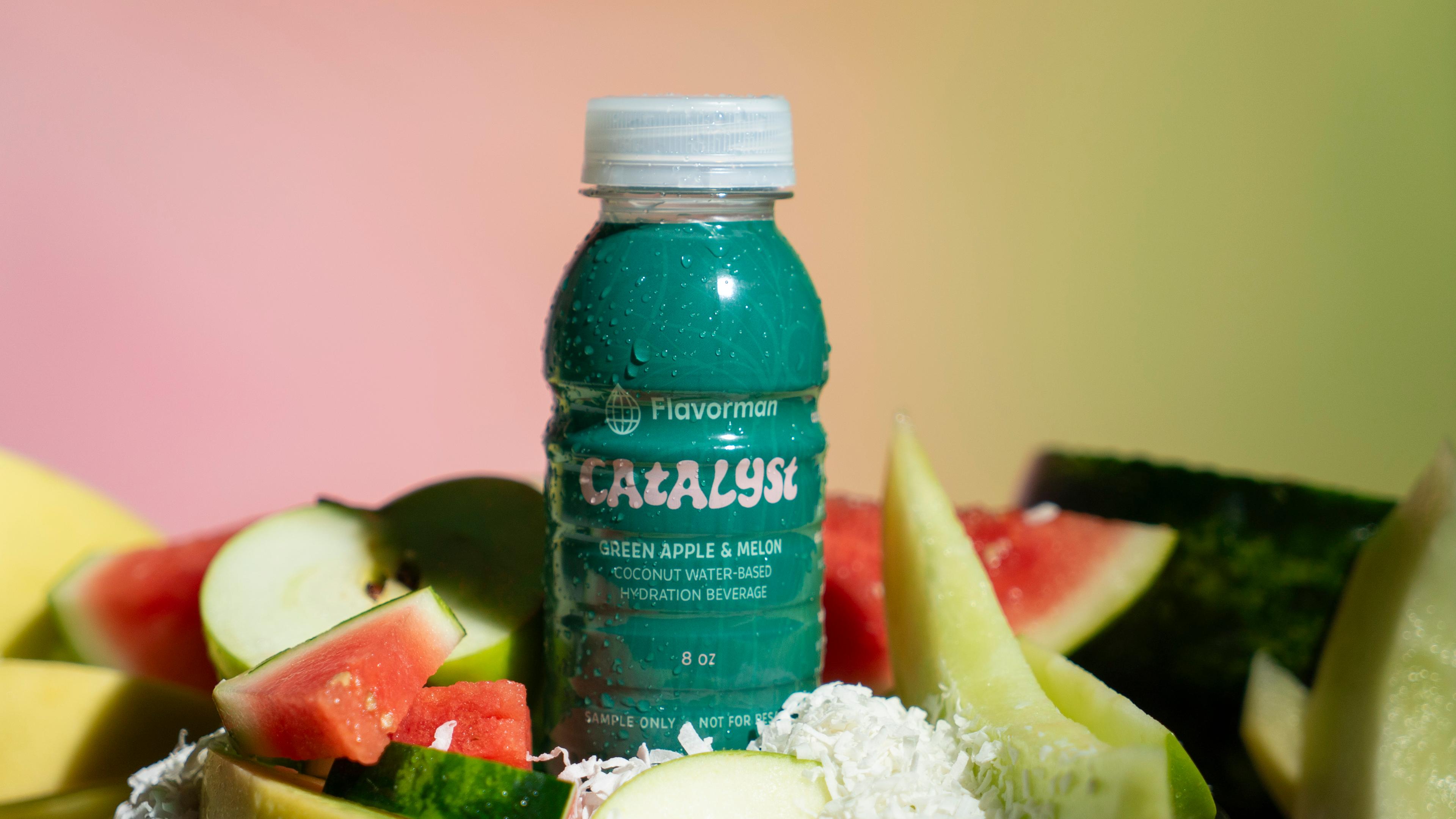
2024 was full of highs, lows, and lifelong memories. To tie it all together, we found that friendship and community are the sources of energy needed to catalyze our success in 2025. This is why we’re thrilled to introduce Catalyst as the Beverage of 2024!
Join us as we unveil a selection of our Beverage Architects' cherished cocktails (including one delightful mocktail) guaranteed to captivate the night.